
Introduction to ISO 14001 Certification
In today’s environmentally conscious world, businesses are expected to operate responsibly while minimizing their environmental impact. This is where ISO 14001 certification plays a crucial role. ISO 14001 is an internationally recognized standard that helps organizations establish an effective Environmental Management System (EMS). By adopting ISO 14001 standards, companies can improve environmental performance, comply with regulations, and enhance their brand reputation.
Whether you are a small business or a multinational organization, ISO 14001 certification demonstrates your commitment to sustainability and environmental protection.
What is ISO 14001?
ISO 14001 is part of the ISO 14000 family of standards developed by the International Organization for Standardization. It provides a structured framework for managing environmental responsibilities in a systematic and sustainable manner.
The standard focuses on:
- Reducing environmental impact
- Efficient use of resources
- Waste management
- Pollution prevention
- Legal and regulatory compliance
ISO 14001 can be applied to any organization, regardless of size or industry.
Understanding ISO 14001:2015
The latest version, ISO 14001:2015, introduced a more strategic and integrated approach to environmental management. It aligns with other ISO management system standards such as ISO 9001 and ISO 45001, making integration easier.
Key features of ISO 14001:2015 include:
- Risk-based thinking to identify environmental risks and opportunities
- Leadership involvement to ensure accountability at top management level
- Life-cycle perspective, considering environmental impacts from raw material sourcing to product disposal
- Continuous improvement of environmental performance
ISO 14001:2015 helps organizations move beyond compliance and focus on long-term environmental sustainability.
Why ISO 14001 Certification is Important
Obtaining ISO 14001 certification offers several advantages for organizations:
- Improved Environmental Performance
The certification helps identify and control environmental impacts, reducing pollution and waste. - Regulatory Compliance
ISO 14001 ensures compliance with environmental laws and regulations, reducing the risk of fines and penalties. - Cost Savings
Efficient resource usage leads to reduced energy consumption, waste disposal costs, and operational expenses. - Enhanced Brand Reputation
Customers, investors, and stakeholders trust organizations that demonstrate environmental responsibility. - Competitive Advantage
Many tenders and contracts require ISO 14001 certification as a mandatory criterion.
ISO 14001 Standards Explained
The ISO 14001 standards are based on the Plan-Do-Check-Act (PDCA) cycle:
- Plan: Identify environmental aspects, legal requirements, objectives, and risks
- Do: Implement environmental policies and operational controls
- Check: Monitor, measure, and audit environmental performance
- Act: Take corrective actions and improve the EMS
This systematic approach ensures continuous improvement and long-term sustainability.
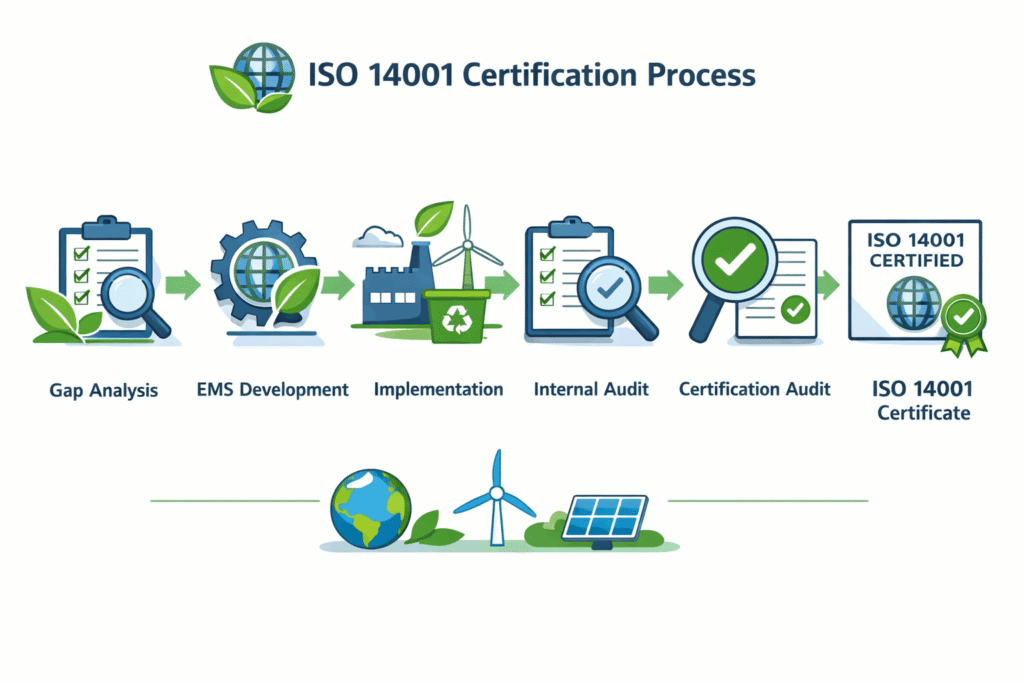
ISO 14001 Certification Process
The ISO 14001 certification process typically includes the following steps:
- Gap Analysis – Assess current environmental practices against ISO 14001 standards
- EMS Development – Create environmental policies, objectives, and procedures
- Implementation – Train employees and implement the EMS across the organization
- Internal Audit – Evaluate system effectiveness and identify improvements
- Certification Audit – Conducted by accredited ISO 14001 certification companies
- Certification Issuance – Valid for three years with annual surveillance audits
Choosing the Right ISO 14001 Certification Companies
Selecting the right ISO 14001 certification companies is critical for a smooth certification journey. When choosing a certification body, consider:
- Accreditation and global recognition
- Industry experience
- Transparent pricing
- Professional auditors
- Post-certification support
Reputed ISO 14001 certification companies ensure credibility and international acceptance of your certification.
Who Should Get ISO 14001 Certified?
ISO 14001 certification is suitable for:
- Manufacturing companies
- Construction firms
- IT and service providers
- Healthcare organizations
- Educational institutions
- Government and public sector units
Any organization aiming to improve environmental performance can benefit from ISO 14001.
Conclusion
ISO 14001 certification is more than just a compliance requirement—it is a strategic tool for sustainable growth. By implementing ISO 14001:2015 and adhering to ISO 14001 standards, organizations can reduce environmental risks, improve efficiency, and gain a competitive edge. Partnering with reliable ISO 14001 certification companies ensures a smooth certification process and long-term success.
In a world where sustainability matters more than ever, ISO 14001 is a powerful step toward a greener and more responsible future.